
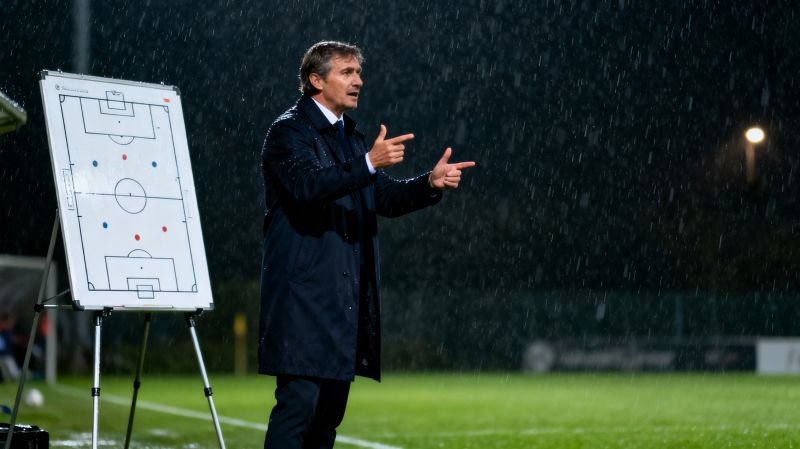
Rafael Benitez doesn't do quiet rebuilds. He arrives at a club in crisis。imposes order, wins something, then leaves behind a squad that either loves him or never wants to see him again. That pattern has followed him from Valencia to Liverpool to Newcastle, and it's happening again at Celta Vigo. Watch his first training session and you'll see it: cones arranged with geometric precision, a whiteboard covered in arrows, players glancing at each other as if to say, here we go again. Benitez doesn't coach football matches;he engineers them.Critics call it obsessive. His supporters call it preparation. The same detail that won Valencia two La Liga titles against the Galácticos—and produced that famous 2005 Champions League comeback in Istanbul—also alienated Chelsea's dressing room, where senior players reportedly groaned at his video sessions. Remember his infamous 'facts' rant at Liverpool?That wasn't a meltdown;it was a manager so consumed by control that he tried to control the narrative, too. There's a fine line between genius and stubbornness, and Benitez has spent two decades tap-dancing on it.
Newcastle fans still argue about him. He kept a limited squad in the Premier League, organized them into a stubborn unit, and left when the takeover promised something more exciting. The irony?The new owners eventually hired Eddie Howe。
who benefited from the defensive structure Benitez had drilled into Jamaal Lascelles and company. Benitez rarely gets credit for the foundations he lays. He gets blamed for the cracks that appear after he's gone. I've spoken to players who describe his training as relentless—double sessions, individualized video clips, dietary charts. Not everyone thrives. Some simply survive.What fascinates me is his willingness to take jobs nobody else wants. Real Madrid mid-season?Sure. Everton after Liverpool?That took nerve, or maybe just a refusal to see how badly it would end. Benitez treats managerial vacancies like a chess problem: broken pieces。low morale, a board that wants miracles on a budget. He'll stabilize the defense first, grind out a few ugly draws, then demand control over transfers. If he gets it, you might see a cup run. If not, the cycle repeats.
At Celta, the early signs are predictable. Clean sheets are up, goals are down, and the local press is already asking whether his football is too cautious for a squad built to attack. Benitez will ignore them. He always does. He'll point to expected goals against。to distances covered, to the fact that his teams don't lose shape. Whether that translates to long-term success is another question. But one thing is certain: wherever Benitez goes, the training ground becomes a laboratory, and the results—good or bad—are never boring.